Manufacturing RFQ Tracker
Never lose another RFQ.
Track quotations, due dates, customers, and pipeline value in one centralized workspace.
See Your RFQs in One Place
Track every RFQ from receipt to quotation without spreadsheets, missed deadlines or lost opportunities.
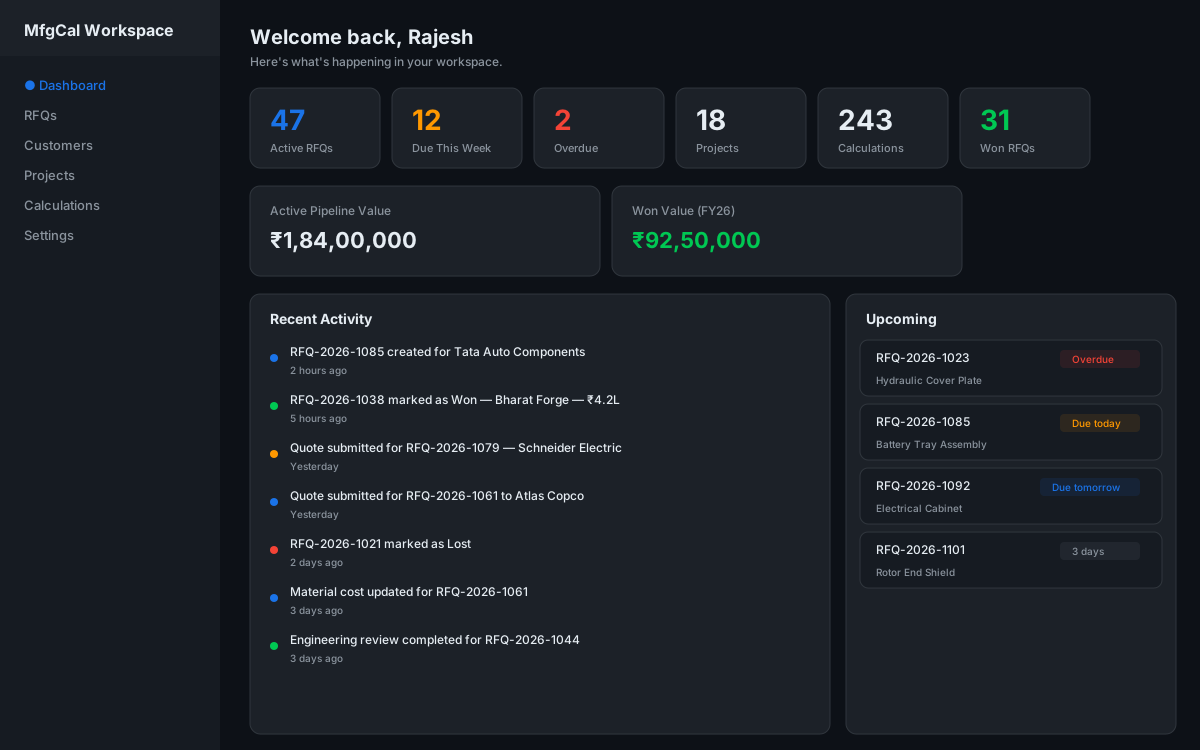
Monitor active RFQs, quotation performance, due dates, pipeline value and customer activity from one centralized dashboard.
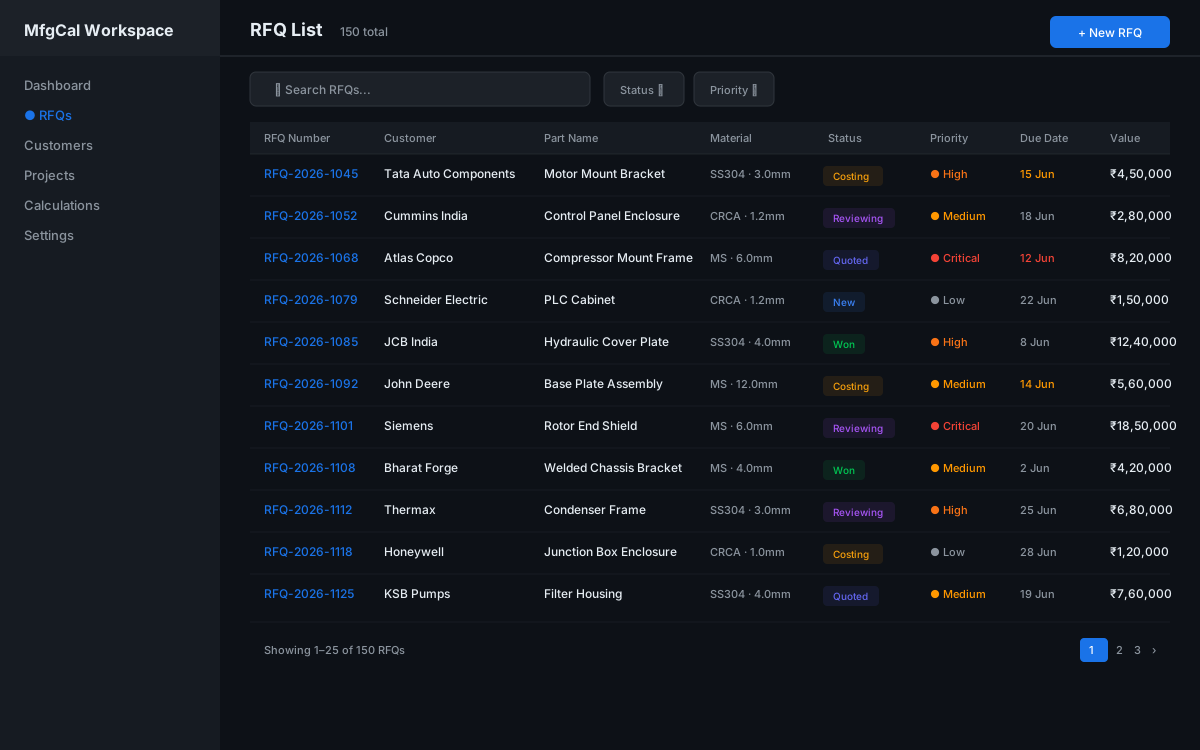
Track RFQ status, priorities, quotations and deadlines with powerful filtering and search.
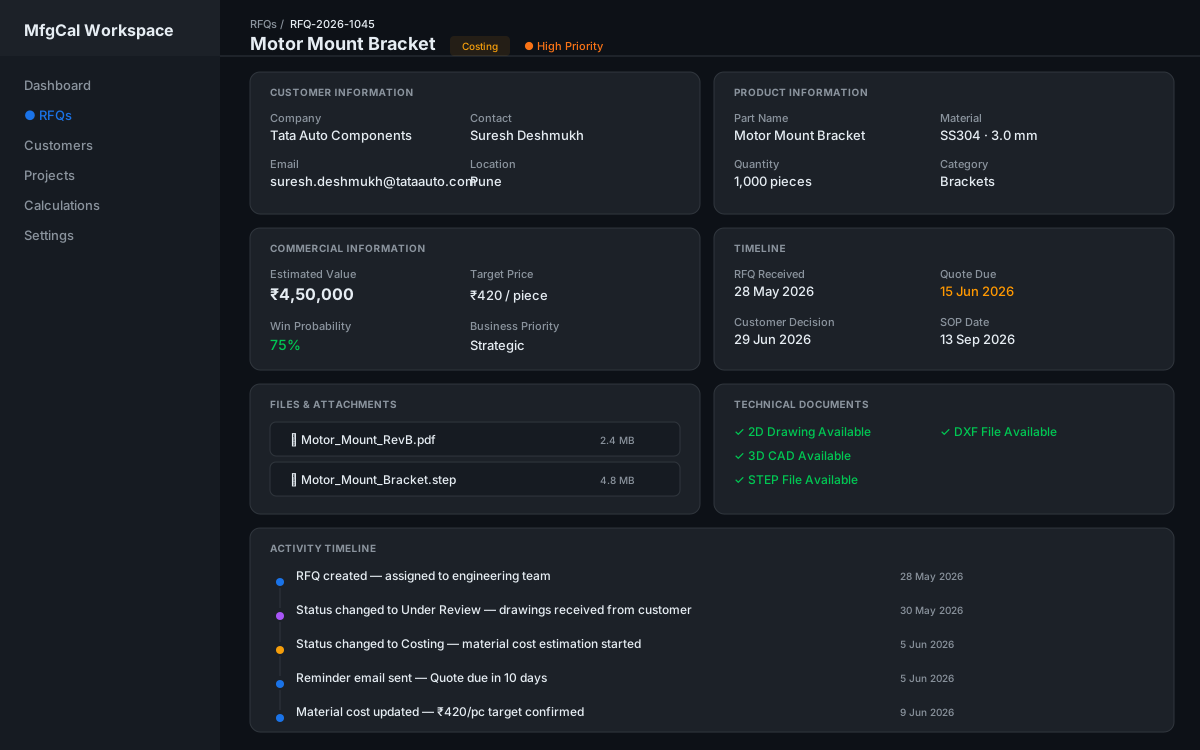
View complete RFQ information including customer details, files, costing and timeline history.
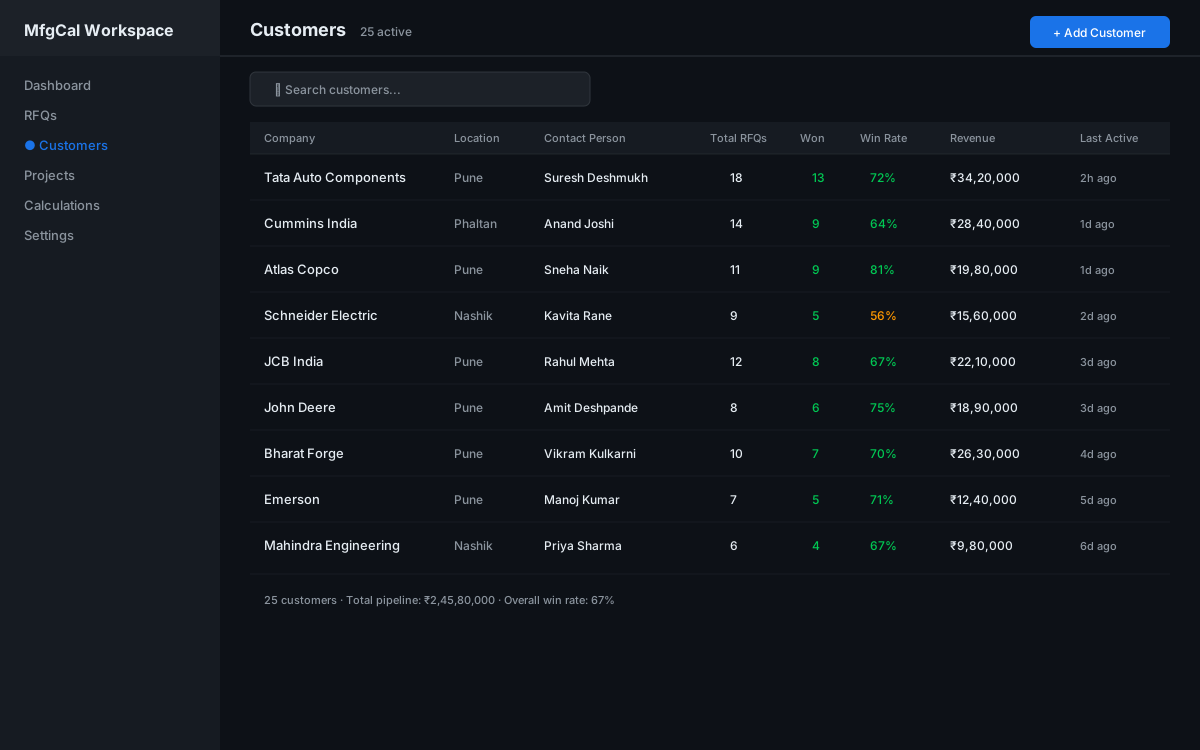
Manage customer relationships, quotation history, win rates and revenue in one place.
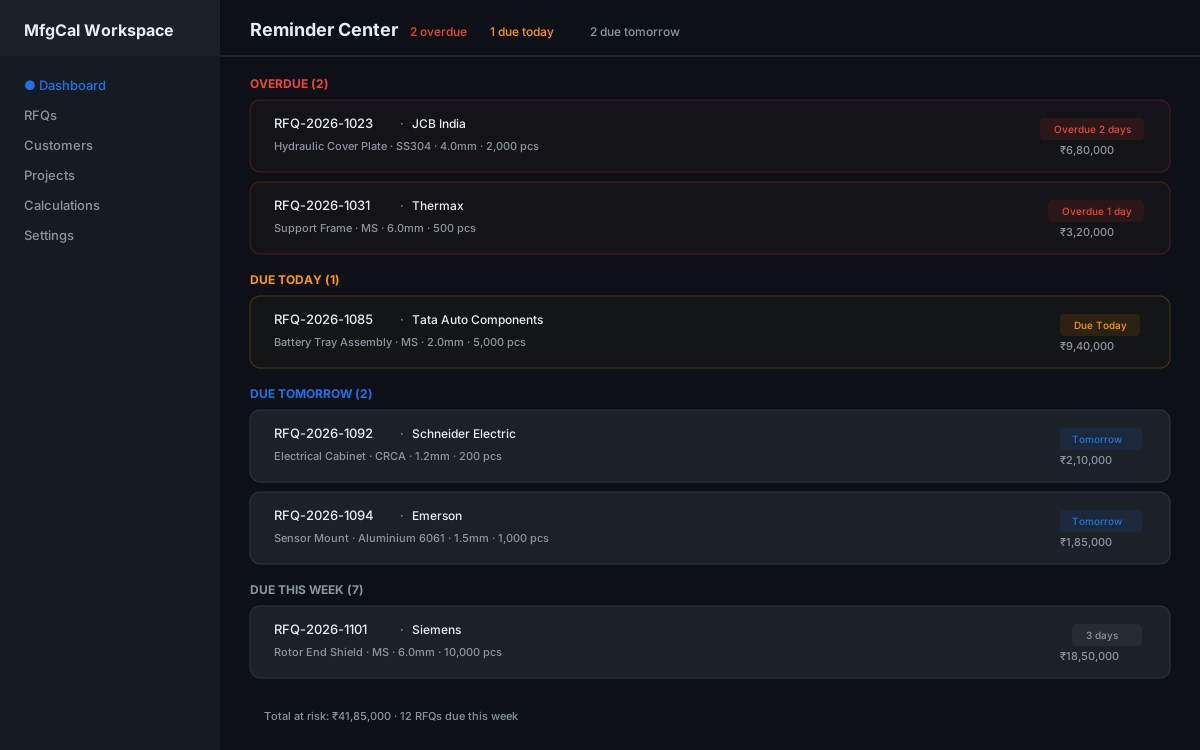
Never miss RFQ deadlines with visual tracking, reminders and overdue alerts.
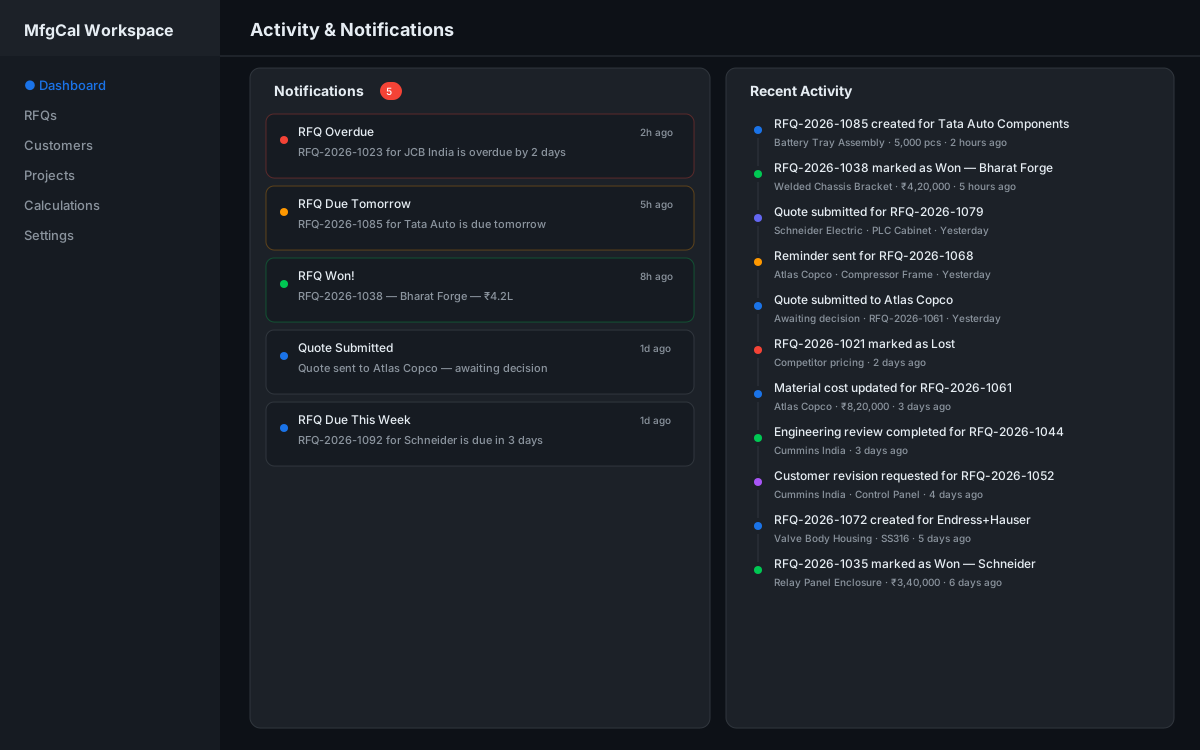
Stay informed with automatic reminders, notifications and activity tracking.
What is RFQ Management?
RFQ Management is the systematic process of handling Requests for Quotation from initial receipt through final outcome. In manufacturing, an RFQ (Request for Quotation) is a formal document sent by a buyer — typically an OEM, Tier-1 supplier, or procurement team — to potential suppliers requesting pricing, lead times, and terms for specific parts, assemblies, or services. Effective RFQ Management ensures that every customer inquiry receives a timely, accurate, and competitive quotation.
Why Manufacturers Use RFQs
The RFQ process is fundamental to manufacturing commerce. OEMs and large buyers use RFQs to standardize their procurement process, compare suppliers objectively, and negotiate competitive pricing. For manufacturers receiving RFQs, each request represents a potential revenue opportunity. A sheet metal fabricator might receive RFQs for blanking operations, a CNC machine shop for precision components, or an injection molding company for plastic housings. Regardless of the manufacturing process, the RFQ workflow follows similar patterns that benefit from structured tracking and management.
RFQ Challenges in Manufacturing
Manufacturing companies face unique RFQ challenges that generic business tools fail to address. Technical drawings must be reviewed by engineering teams. Material costs fluctuate and require current pricing from the material cost calculator or supplier quotations. Manufacturing feasibility must be assessed — does the shop have the right press tonnage or CNC capacity? Tooling costs must be estimated. Quality requirements must be evaluated. All of this must happen before a single price is quoted, often within tight deadlines set by the customer.
The RFQ Lifecycle
Every RFQ follows a lifecycle from creation to closure. The manufacturing RFQ lifecycle begins when a customer sends an inquiry — whether by email, portal, or direct communication. The RFQ is then logged, assigned, and moves through various review stages: commercial feasibility, engineering capability, manufacturing capacity, supply chain availability, and quality compliance. Once all reviews are complete and costing is finalized, management approves the quotation, which is then sent to the customer. The RFQ remains active during the customer decision period until the customer awards the business (Won) or selects another supplier (Lost). This complete lifecycle — from receipt to outcome — is what RFQ Tracking Software manages.
Common RFQ Tracking Mistakes
Many manufacturers lose revenue not because their pricing is uncompetitive, but because their RFQ process is broken. Common mistakes include: missing submission deadlines because no one tracked the due date, losing RFQ documents in email threads, not tracking customer decisions after sending quotations, not knowing which RFQs are stuck in internal review, duplicating effort because previous quotations cannot be found, and having no visibility into pipeline value or win rates. These mistakes compound over time — a manufacturer processing 50 RFQs per month who misses just 10% of deadlines loses 60 opportunities per year. Manufacturing RFQ Software eliminates these failures by providing structured workflows, automated reminders, and complete visibility into every active quotation.
RFQ Management vs. Sales Management
RFQ Management in manufacturing is distinctly different from generic sales pipeline management. While a CRM tracks leads and deals, manufacturing RFQ Management must handle technical document review, multi-stage costing (material + manufacturing + tooling + purchased parts), engineering feasibility assessment, and production capacity planning. A quotation for a sheet metal bent component requires calculating bend allowances, material weight using a steel weight calculator, and press requirements — none of which a generic CRM supports. This is why dedicated Manufacturing RFQ Software exists as a category distinct from general-purpose business tools.
Complete Manufacturing RFQ Workflow
A comprehensive RFQ Workflow Software must support every stage that a manufacturing quotation passes through. Unlike simplified sales funnels, the manufacturing RFQ process involves multiple departments, technical reviews, and approval gates. Here is the complete workflow that leading manufacturers follow:
RFQ Received
The customer inquiry enters the system. All documents — drawings, specifications, BOMs, quality requirements — are captured. Key information is logged: customer name, part description, quantity, target price (if provided), and submission deadline. This is the entry point for every RFQ in your Manufacturing RFQ Management System.
Commercial Review
The sales or commercial team evaluates the business opportunity. They assess customer creditworthiness, order volume potential, payment terms, delivery requirements, and strategic fit. This stage determines whether the RFQ is worth pursuing or should be declined.
Engineering Review
Engineers review technical drawings, GD&T requirements, material specifications, and manufacturing feasibility. They identify potential design issues, suggest alternatives, and confirm that the part can be manufactured to specification. For sheet metal parts, this includes reviewing bend radii, tolerances, and development calculations.
Manufacturing Review
Production teams assess manufacturing capability, capacity availability, cycle times, and process routing. They determine which machines, tools, and operations are required, estimate production timelines, and flag any capacity constraints that might affect delivery commitments.
Supply Chain Review
Procurement evaluates material availability, lead times, supplier pricing, and any special material requirements. They obtain material quotations, check inventory for standard materials, and identify long-lead items that could impact delivery schedules.
Quality Review
Quality teams review inspection requirements, PPAP level, testing needs, certifications required, and any special quality processes. They assess whether current quality systems can meet customer requirements and estimate inspection costs.
Management Approval
Senior management reviews the complete quotation package — pricing, margins, terms, delivery commitments, and risk assessment. They approve, reject, or request revisions. This gate ensures that quotations align with business strategy and profitability targets.
Quote Ready
The final quotation document is prepared with all pricing, terms, conditions, delivery schedules, and validity period. The quotation package is assembled for customer presentation.
Quote Sent
The quotation is formally submitted to the customer. The submission date, method, and recipient are recorded. The RFQ status transitions to awaiting customer response.
Customer Decision Tracking
Scheduled check-ins ensure the customer has received the quotation, address any questions, and maintain engagement. Automated reminders in RFQ Reminder Software ensure no customer decision is left untracked.
Won / Lost
The final outcome is recorded. Won RFQs transition to order processing. Lost RFQs capture the reason — price, delivery, technical capability, or relationship — for future analysis and improvement.
Archive
Completed RFQs are archived with full history — every document, note, cost breakdown, and communication. This archive becomes invaluable for future quotations to the same customer or for similar parts, reducing costing time significantly.
RFQ Costing Workflow
Accurate costing is the foundation of competitive quotations. The RFQ costing workflow breaks down the total part cost into distinct categories, each requiring specialized knowledge and tools. Here is how manufacturing companies structure their costing process:
Material Costing
Calculate raw material cost based on part weight, material grade, current market rates, and scrap allowance. For sheet metal, this involves calculating blank size, nesting efficiency using a blanks per sheet calculator, and coil weight requirements. Material typically represents 40-60% of total part cost.
Manufacturing Costing
Estimate processing costs including machine time, labor, cycle time, setup time, and overhead allocation. Each operation — cutting, bending, welding, machining, finishing — contributes to the manufacturing cost. Accurate cycle time estimation directly impacts quotation competitiveness.
Tooling Costing
Estimate costs for dies, molds, jigs, fixtures, and gauges required to produce the part. Tooling costs may be amortized across the order quantity or quoted separately. For press tools, press tonnage requirements influence tool design and cost.
Purchased Parts Costing
Obtain quotations for bought-out components — fasteners, inserts, bearings, electronics, surface treatments, and sub-contracted operations. Each purchased item requires supplier quotation and lead time confirmation.
Commercial Review
Apply profit margins, account for payment terms, freight costs, packaging, warranty provisions, and volume discounts. The commercial team ensures the final price is competitive while meeting profitability targets.
Management Approval
Final pricing review by management ensures strategic alignment. Large quotations, new customers, or low-margin opportunities require explicit approval before submission. This prevents pricing errors and ensures business discipline.
How MfgCal Supports RFQ Costing
MfgCal integrates manufacturing calculators directly into the RFQ workflow. When costing an RFQ, teams can calculate material costs, determine part weights, estimate press tonnage, compute bend allowances, and optimize blank layouts — all without leaving the RFQ Tracker. This integration eliminates context switching and ensures costing accuracy.
RFQ Metrics Every Manufacturer Should Track
What gets measured gets managed. These are the essential RFQ KPIs that every manufacturing company should monitor to improve quotation performance and revenue:
RFQs Received
Total number of RFQs received in a period. This measures market demand and sales team effectiveness in generating inquiries. Tracking trends reveals seasonal patterns and growth trajectory.
Active RFQs
Current number of RFQs in progress — not yet quoted or awaiting outcome. This measures team workload and helps identify resource constraints before deadlines are missed.
Pipeline Value
Total potential revenue from all active RFQs. This forward-looking metric helps manufacturers forecast revenue, plan capacity, and prioritize high-value opportunities.
Due This Week
Number of RFQs with submission deadlines in the current week. This urgency metric drives daily prioritization and ensures the team focuses on imminent deadlines first.
Overdue RFQs
RFQs that have passed their due date without quotation submission. Every overdue RFQ represents a potential lost opportunity. This metric should always be zero — any non-zero value requires immediate action.
Win Rate
Percentage of quoted RFQs that result in orders. Calculated as (Won ÷ Total Quoted) × 100. Industry average is 20-35%. Tracking win rate by customer, product, and value range reveals competitive strengths.
Loss Rate
Percentage of quoted RFQs lost to competitors. More importantly, tracking loss reasons (price, delivery, quality, relationship) identifies specific improvement areas.
Revenue Won
Total value of RFQs converted to orders. This is the ultimate output metric — it measures how effectively the quotation process converts opportunities into revenue.
Revenue Lost
Total value of RFQs lost to competitors. When this number is high relative to Revenue Won, it signals systemic issues in pricing, delivery, or customer relationships.
Average Lead Time
Average days from RFQ receipt to quotation submission. Faster response times correlate with higher win rates. Top manufacturers target 3-5 days for standard RFQs and 7-10 days for complex ones.
Customer Win Rate
Win rate broken down by individual customer. This reveals which customer relationships are strongest and where competitive pressure is highest. Low win rates with specific customers may indicate pricing misalignment or relationship issues.
Automated RFQ Reminder System
Manual tracking fails at scale. An automated RFQ Reminder Software system ensures every stakeholder receives timely notifications without anyone needing to remember or manually send reminders. Here are the automated reminders that drive manufacturing RFQ performance:
🆕 New RFQ Assigned
Instantly notifies the assigned team member when a new RFQ is created and assigned to them. Eliminates delays caused by manual handoffs or missed email forwards.
💰 Costing Pending
Reminds the costing team when an RFQ is awaiting cost estimation. Prevents RFQs from stalling in the costing stage — often the longest bottleneck in the quotation process.
⚙️ Engineering Review Pending
Alerts engineering when drawings and specifications need technical review. Ensures feasibility assessment happens early, preventing costly surprises later in the process.
✅ Management Approval Pending
Notifies management when a quotation is ready for final approval. Reduces approval bottlenecks that cause missed deadlines, especially when managers are traveling or in meetings.
📤 Quote Ready
Alerts the sales team when a quotation has been approved and is ready for customer submission. Ensures immediate dispatch rather than quotations sitting in an approval queue.
📅 RFQ Due Tomorrow
Sends a warning one day before the submission deadline. Gives the team a final opportunity to expedite any pending actions and submit on time.
🔴 Due Today
Morning notification for RFQs due today. Creates urgency and ensures same-day submission. Critical for maintaining customer trust and competitive positioning.
⚠️ Overdue
Escalation alert when an RFQ has missed its deadline. Triggers immediate action — either expediting the quotation or contacting the customer to request an extension.
📞 Customer Decision Reminder
Scheduled reminders to check customer decisions after quotation submission. Consistent engagement is proven to improve win rates by 15-25% compared to single-submission approaches.
⏳ Quote Expiry
Warns when a submitted quotation is approaching its validity expiration date. Triggers proactive customer contact to either extend validity or understand their decision timeline.
Benefits of Automated RFQ Reminders
Example Manufacturing RFQ
Here is a real-world example of how a manufacturing RFQ flows through the complete workflow using MfgCal RFQ Tracker:
RFQ Tracking by Industry
RFQ Tracking for Sheet Metal Manufacturers
Sheet metal manufacturers handle unique RFQ challenges — flat pattern development, bend allowance calculations, nesting optimization, and multi-operation process routing. A typical sheet metal RFQ requires evaluating material gauge, blanks per sheet efficiency, press tonnage requirements, and surface finish specifications. Without structured RFQ Tracking Software, sheet metal shops struggle to provide accurate quotations quickly — especially when handling 20-50 RFQs simultaneously. MfgCal connects sheet metal calculators directly into the RFQ workflow, enabling faster and more accurate costing. The material cost calculator helps determine raw material costs, while the steel weight calculator provides instant weight estimates for shipping and pricing calculations.
RFQ Tracking for Injection Molding Companies
Injection molding companies face complex RFQ requirements: mold design evaluation, material selection (resin type, additives, colorants), cycle time estimation, multi-cavity analysis, and secondary operation planning. Tooling costs for injection molds are substantial — often ₹5-50 lakhs — making accurate quotation critical. RFQ Management Software for injection molders must track mold development timelines alongside part pricing, manage revision history as designs change during the quotation phase, and maintain records of material specifications and test requirements. The quotation process often spans 2-4 weeks due to mold design complexity, making automated reminders and deadline tracking essential for timely responses.
RFQ Tracking for CNC Machine Shops
CNC machine shops receive RFQs requiring detailed process planning — fixture design, tool selection, multi-axis programming assessment, and tolerance capability evaluation. Each RFQ demands cycle time estimation based on part geometry, material machinability, and surface finish requirements. High-mix, low-volume CNC shops may handle 30-100 active RFQs at any time, making visibility and prioritization critical. Supplier RFQ Tracking for CNC shops must support rapid quoting for repeat parts (referencing historical quotations), flag capacity constraints when the shop floor is loaded, and track setup time recovery across order quantities.
RFQ Tracking for Fabrication Companies
Metal fabrication companies handle diverse RFQs spanning cutting, bending, welding, assembly, and finishing operations. A single fabrication RFQ may involve multiple processes, sub-assemblies, and purchased components. The costing complexity increases with BOM depth — a welded assembly might require costing 15-30 individual components plus assembly labor. RFQ Workflow Software for fabricators must support multi-level BOMs, track sub-vendor quotations for specialized processes (heat treatment, plating, painting), and manage revision control as customer designs evolve during the quotation phase.
RFQ Tracking for Automotive Suppliers
Automotive suppliers operate under strict timelines, quality requirements (IATF 16949), and cost pressures. OEM RFQ Management for automotive requires tracking PPAP levels, annual volume commitments, year-over-year cost reduction expectations, and packaging specifications. Automotive RFQs often involve multi-year contracts with complex pricing structures — tooling amortization, VA/VE commitments, and raw material indexing. Missing a single automotive RFQ deadline can damage supplier ratings and future business opportunities. Tier-1 Supplier RFQ Software must handle the rigor and documentation requirements that automotive OEMs demand.
RFQ Tracking for Tier-1 Suppliers
Tier-1 suppliers manage RFQs from OEMs while simultaneously issuing RFQs to their own sub-suppliers (Tier-2, Tier-3). This dual role creates unique complexity — tracking incoming OEM deadlines while coordinating Tier-2 quotation responses to complete cost buildup. Tier-1 Supplier RFQ Software must support hierarchical RFQ management, link sub-supplier quotations to parent RFQs, manage nomination processes, and track program timelines spanning 6-18 months from RFQ to start of production. Pipeline values at Tier-1 level often run into crores, making accurate forecasting essential for capacity planning and investment decisions.
RFQ Tracking for OEM Vendors
OEM vendors — whether supplying to automotive, appliance, electronics, or industrial OEMs — must meet exacting standards for quotation quality, response time, and documentation. OEM RFQ Management requires maintaining detailed cost breakdowns (often in customer-specified formats), tracking multiple revision levels as specifications change, managing sample submission timelines, and demonstrating process capability before production approval. The quotation is often the first impression an OEM has of a vendor's capability — professional, timely, and detailed quotations differentiate winning suppliers from those who are never invited back.
Excel vs ERP vs CRM vs MfgCal for RFQ Management
Manufacturers often try to manage RFQs using tools not designed for the purpose. Here is how dedicated Manufacturing RFQ Software compares to common alternatives:
| Feature | Excel | ERP | CRM | MfgCal |
|---|---|---|---|---|
| RFQ Workflow | ❌ Manual | ⚠️ Basic | ⚠️ Sales-focused | ✓ Manufacturing-specific |
| Costing Reviews | ❌ None | ⚠️ Limited | ❌ None | ✓ Multi-stage costing |
| Management Approval | ❌ None | ⚠️ Complex setup | ❌ None | ✓ Built-in approval gate |
| RFQ KPIs | ❌ Manual charts | ⚠️ Generic reports | ⚠️ Sales metrics | ✓ Manufacturing KPIs |
| Due Date Tracking | ⚠️ Manual conditional formatting | ⚠️ Not RFQ-specific | ⚠️ Deal-focused | ✓ RFQ deadline-focused |
| Auto Reminders | ❌ None | ⚠️ Requires customization | ⚠️ Sales reminders | ✓ RFQ-specific reminders |
| Customer History | ❌ Scattered files | ⚠️ Order history only | ✓ Good | ✓ RFQ + quotation history |
| Pipeline Reporting | ❌ None | ❌ Not pre-order | ✓ Sales pipeline | ✓ RFQ pipeline value |
The key difference: MfgCal is purpose-built for the manufacturing quotation process. ERPs handle post-order operations. CRMs handle customer relationships. Excel handles nothing automatically. Only dedicated Manufacturing RFQ Software handles the complete pre-order quotation workflow that manufacturers follow daily.
Everything You Need to Manage RFQs
RFQ Tracking
Track all RFQs from receipt to final outcome.
Customer Database
Store customer and contact information.
Due Date Reminders
Never miss quotation deadlines.
RFQ Status Workflow
Track RFQs through every stage.
Document Management
Store drawings, PDFs, DXFs and related files.
Email Notifications
Automatic reminders and notifications.
Pipeline Value Tracking
Monitor active quotation value.
Search & Filters
Find RFQs instantly.
Win/Loss Tracking
Measure quotation performance.
Activity Timeline
View complete RFQ history.
Frequently Asked Questions
What is RFQ Management Software?▼
RFQ Management Software is a digital tool designed to help manufacturers manage the entire Request for Quotation lifecycle — from receiving customer inquiries to submitting quotations, tracking due dates, monitoring win/loss outcomes, and maintaining complete customer history. Unlike generic CRM or ERP systems, dedicated RFQ Management Software focuses specifically on the quotation workflow that manufacturing companies follow daily.
How do OEM suppliers manage RFQs?▼
OEM suppliers typically manage RFQs through a structured workflow: receiving the RFQ package from the OEM, conducting commercial and engineering reviews, performing detailed costing (material, manufacturing, tooling), obtaining management approval, and submitting the quotation before the deadline. Leading OEM suppliers use dedicated RFQ Tracking Software to ensure nothing falls through the cracks and response times remain competitive.
What RFQ workflow should manufacturers follow?▼
A comprehensive manufacturing RFQ workflow includes: RFQ Received → Commercial Review → Engineering Review → Manufacturing Review → Supply Chain Review → Quality Review → Management Approval → Quote Ready → Quote Sent → Customer Decision Tracking → Won/Lost → Archive. Each stage ensures proper evaluation before committing to pricing and delivery timelines.
How do you calculate RFQ win rate?▼
RFQ Win Rate is calculated as: (Number of RFQs Won ÷ Total RFQs Quoted) × 100. For example, if you quoted 50 RFQs in a month and won 15, your win rate is 30%. Tracking win rate by customer, product type, and value range helps identify where your company is most competitive.
How do you track overdue RFQs?▼
Overdue RFQs are tracked by comparing the assigned due date against the current date. Any RFQ that has passed its due date without a quotation being sent is marked as overdue. MfgCal RFQ Tracker automatically flags overdue RFQs, sends reminder notifications, and highlights them on the dashboard for immediate attention.
RFQ Tracker vs Excel?▼
Excel requires manual data entry, has no automated reminders, offers no real-time status visibility, cannot send notifications, and becomes unmanageable as RFQ volume grows. A dedicated RFQ Tracker provides automated workflows, email reminders, pipeline reporting, customer history, and team collaboration — all without the risk of lost or corrupted spreadsheets.
RFQ Tracker vs ERP?▼
ERP systems are designed for production planning, inventory, and accounting — not quotation management. Most ERP systems lack dedicated RFQ workflows, costing review stages, automated quote reminders, and pipeline analytics. A dedicated RFQ Tracker complements your ERP by handling the pre-order quotation process that ERPs typically ignore.
RFQ Tracker vs CRM?▼
CRM systems focus on customer relationship management and sales pipelines. They lack manufacturing-specific features like costing workflows, engineering reviews, material cost integration, and production feasibility tracking. A manufacturing RFQ Tracker understands that quotations require technical evaluation, not just sales pipeline management.
What KPIs should RFQ managers monitor?▼
Key RFQ KPIs include: RFQs Received (volume), Active RFQs (workload), Pipeline Value (potential revenue), Due This Week (urgency), Overdue RFQs (risk), Win Rate (effectiveness), Loss Rate (improvement areas), Revenue Won (business impact), Average Lead Time (efficiency), and Customer Win Rate (relationship strength).
How do automated RFQ reminders work?▼
Automated RFQ reminders trigger email notifications based on predefined rules: when a new RFQ is assigned, when costing is pending, when engineering review is needed, when management approval is required, when quotes are due tomorrow or today, when RFQs become overdue, and when customer decisions are pending. This eliminates manual tracking and ensures no RFQ is forgotten.
Start Tracking RFQs for Free
Create your first RFQ in less than two minutes.